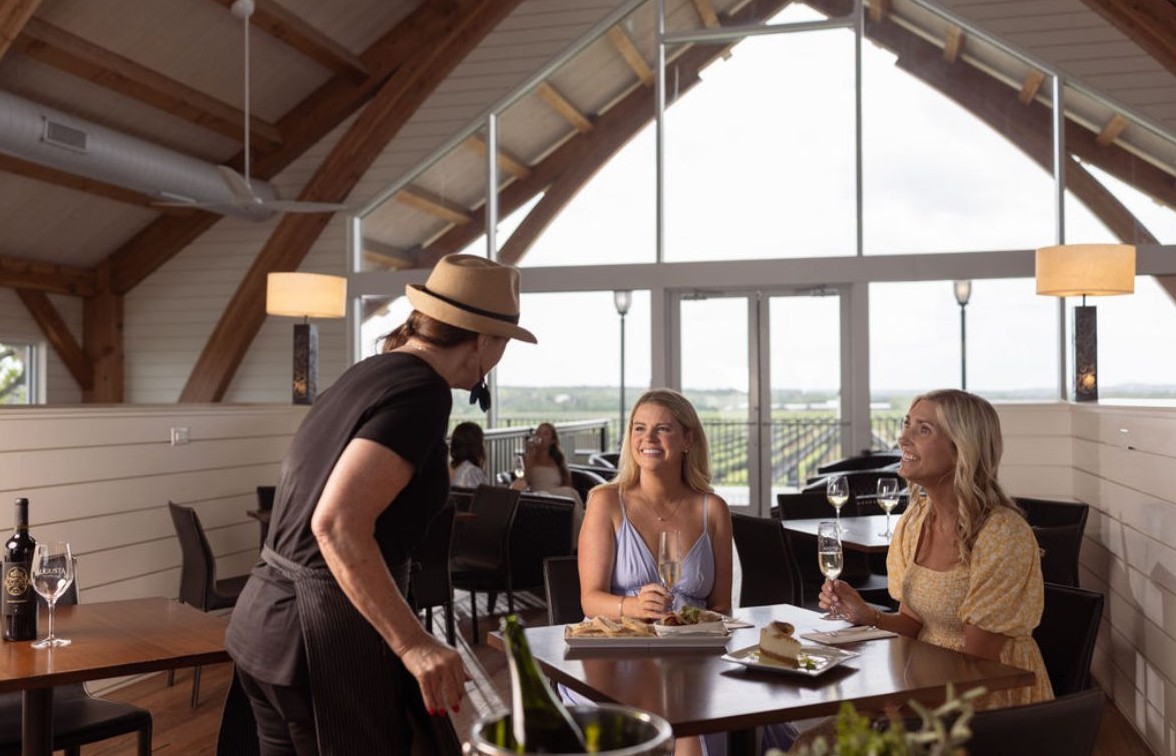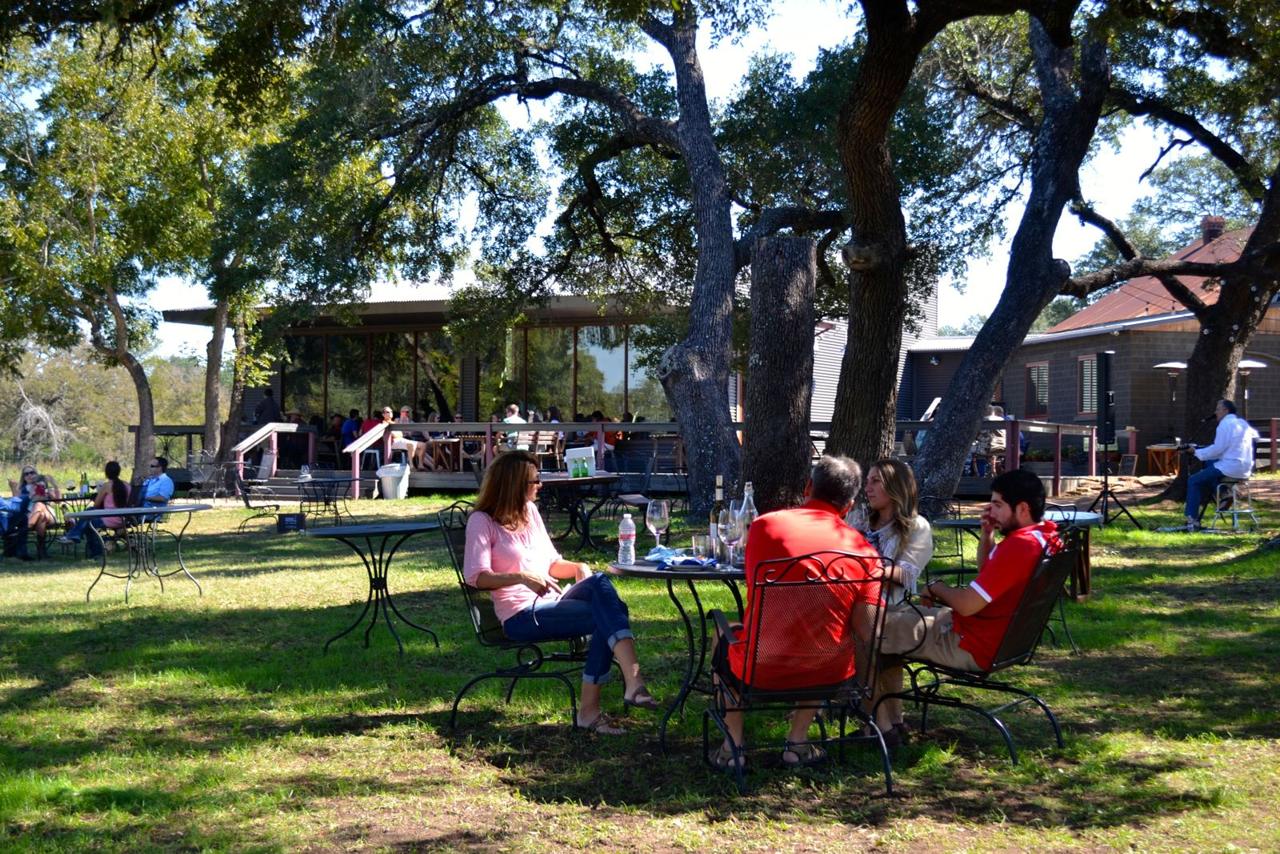
The first question I hear in the van is usually some version of "Wait, they make wine in Texas?" The second is "Why does everything on this menu have a name I can't pronounce?" Both are fair. Texas wine isn't trying to be Napa. The grapes that do best here come from hot, sunny places like Spain, Portugal, southern France and southern Italy, and once you know a few of them, a Hill Country tasting menu starts to make a lot of sense.
Here's my cheat sheet.
Why Mediterranean grapes love Texas
Our summers are long, hot and dry. Cool-climate grapes like Pinot Noir struggle in that kind of heat, but grapes from the Mediterranean grew up with it. They hold on to their color and acidity in strong sun, and many of them handle drought well.
The ground matters too. Around Fredericksburg you'll find limestone, granite and sandy soils that drain fast. Vines have to work a little harder, which tends to mean smaller grapes with more concentrated flavor.
The Hill Country also has a challenge that shapes what gets planted: Pierce's disease, a vine-killing bacteria spread by insects that thrives in warm, humid places. That's one reason you'll see tough, disease-resistant grapes like Blanc du Bois here.
Hill Country wineries, High Plains grapes
Here's the part that surprises people. Many of the grapes poured on Highway 290 aren't grown on Highway 290. Most Texas wine grapes come from the Texas High Plains around Lubbock, roughly 300 miles northwest of Fredericksburg. Vineyards there sit at about 3,000 to 4,000 feet, where the days are hot but the nights cool off, which grapes love.
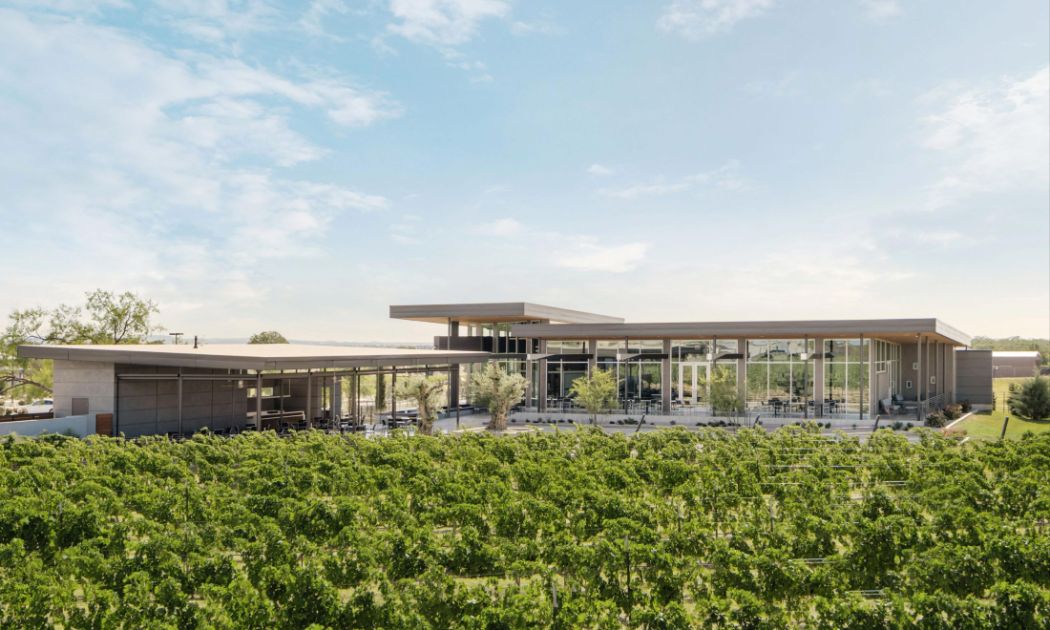
At harvest, usually July through September, that fruit is picked and trucked to Hill Country wineries to be crushed, fermented and aged. Some wineries farm their own High Plains vineyards, like Kalasi Cellars, Lost Draw and Bingham Family Vineyards, and many also grow grapes right here.
The Texas Hill Country is one of the largest American Viticultural Areas (AVAs) in the country, and Fredericksburg has its own smaller AVA inside it, called Fredericksburg in the Texas Hill Country.
The reds
Tempranillo
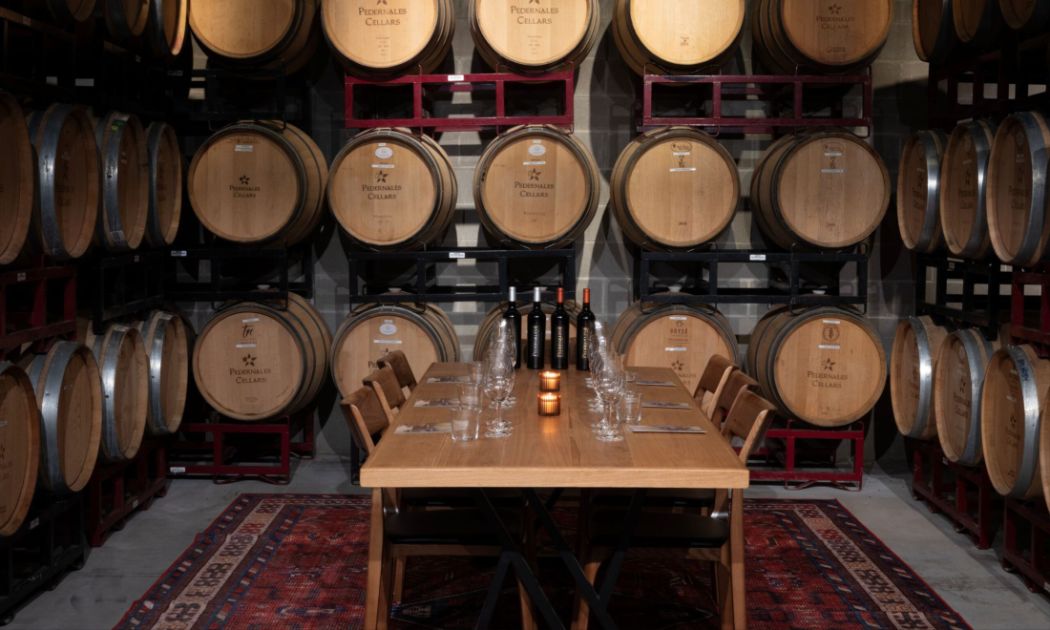
Spain's signature grape and the Texas red with the biggest following. Expect cherry, plum, leather, tobacco and a little dusty spice. Try it at: Pedernales Cellars in Stonewall, which even offers a Tempranillo tasting, Ron Yates in Hye and Featherstone Ranch.
Mourvèdre
Dark berries, black pepper and something savory, almost meaty. It's the "M" in a GSM blend (Grenache, Syrah, Mourvèdre). Try it at: Signor Vineyards, K Estate and Pedernales Cellars.
Tannat
The big one. Tannat comes from southwest France and Uruguay, and it's dark, inky and full of tannin, with blackberry and smoky notes. Have it with a steak. Try it at: Ab Astris in Stonewall, where it's the signature planting, and Signor Vineyards, whose Estate Tannat has won Platinum at TEXSOM.
Sangiovese
Tuscany's grape. Bright cherry, red plum, dried herbs and enough acidity to make it wonderful with pizza and pasta. Try it at: Kalasi Cellars, Lost Draw and Untamed Wine Estates in Johnson City, which has a pizzeria right on site.
The whites
Viognier
Often called Texas's signature white. It's rich and fragrant, with apricot, peach and honeysuckle. Try it at: Pedernales Cellars, Becker Vineyards (look for the Reserve Viognier) and Bingham Family Vineyards.
Roussanne
A white from France's Rhône Valley with pear, honey, herbal tea and a creamy texture. A great next step if you like Chardonnay. Try it at: Kalasi Cellars, K Estate and Lost Draw.
Albariño
From the coast of northwest Spain, and it tastes like it: crisp, citrusy and a little salty. Perfect on a 100-degree afternoon. Try it at: Pedernales Cellars, Featherstone Ranch and Siboney Cellars.
Picpoul
Picpoul Blanc comes from southern France, and its name roughly means "lip stinger" because of its zippy acidity. Think lemon, green apple and a clean, crisp finish. Try it at: Michael Ros Winery, Siboney Cellars and Narrow Path Winery.
Blanc du Bois
A hybrid grape developed in Florida to stand up to Pierce's disease, which makes it a smart fit for warm, humid Texas. It's aromatic, with grapefruit, lime and white flowers, and it's made dry, off-dry, sweet and even sparkling. Try it at: William Chris Vineyards and Halter Ranch.
And the bubbles
Texas sparkling wine is having a moment. Heath Sparkling Wines on Highway 290 makes its sparkling wines in the traditional method, the same way Champagne is made. If you know me, you know that's my glass.
How to taste like a pro (without being snooty)
- Go light to bold. Whites and rosé first, then reds, then anything sweet. Your host will pour in the right order.
- Look, swirl, sniff, sip. Swirling wakes up the aromas, and so much of what you taste is really what you smell.
- Drink water between pours. We keep cold water in the van for exactly this reason.
- Spitting and pouring out are totally fine. Every tasting room has a dump bucket. Nobody expects you to finish every pour, and with three stops, pacing yourself is smart.
- Eat something. Have a real lunch before pickup. A cheese board between pours helps too.
- Ask questions. Hosts love telling you where the grapes were grown. It's how you find your new favorite.
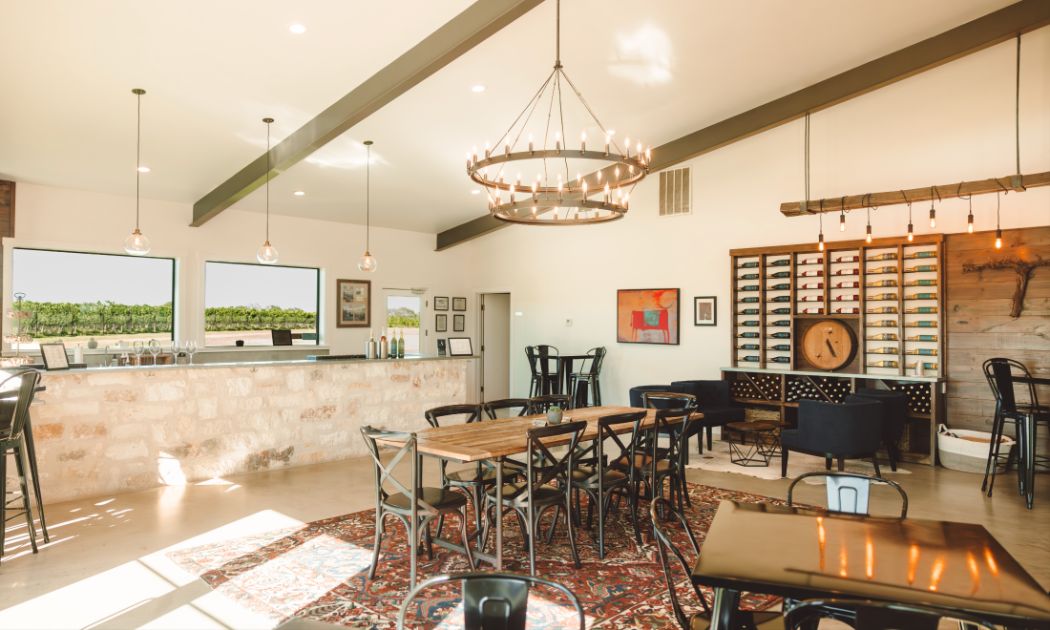
A quick glossary
- AVA
- American Viticultural Area, an official grape-growing region like Texas Hill Country or Texas High Plains.
- Estate-grown
- Made from grapes grown on the winery's own vineyards.
- Texas High Plains
- The high, flat region around Lubbock where most Texas wine grapes are grown.
- Tannin
- The drying, grippy feeling from red wine, which comes from grape skins, seeds and oak.
- Acidity
- The bright, mouthwatering quality that keeps wine tasting fresh.
- Dry
- Little or no sugar left in the wine. It has nothing to do with tannin.
- GSM
- A blend of Grenache, Syrah and Mourvèdre.
- Traditional method
- The Champagne method, where the bubbles come from a second fermentation in the bottle.
- Flight
- A set of small pours you taste side by side.
- Dump bucket
- Where you pour out what you don't want to finish. Use it.
Read the label
Under federal labeling rules, a wine labeled "Texas" must be made from at least 75% Texas grapes, and a wine labeled with an AVA, like "Texas High Plains" or "Texas Hill Country," must get at least 85% of its grapes from that area. Many Hill Country wineries go further and make wine from 100% Texas-grown fruit. Look for it on the label, or just ask your host.
Taste your way through them with us
Our Classic tour visits three handpicked wineries from 1 to 5 PM, and on a Private tour you can build your stops around the grapes you want to try. Add the Tasting Pass for $89 per guest and your tastings are reserved at every stop, or order by the glass.
Cheers!
Savannah
Quick answers
What grapes grow best in Texas?
Warm-climate grapes from Spain, Portugal, southern France and Italy, like Tempranillo, Tannat, Mourvèdre, Sangiovese, Viognier, Roussanne and Albariño, plus the disease-resistant hybrid Blanc du Bois.
Are Hill Country wines made from Hill Country grapes?
Some are, but most Texas wine grapes are grown on the Texas High Plains near Lubbock and trucked to Hill Country wineries at harvest. Many wineries use both.
Is it rude to spit or pour out wine at a tasting?
Not at all. Every tasting room has a dump bucket, and pacing yourself across three wineries is smart.
Make it easy on yourself
Pickup at your in-town lodging, every stop reserved, and a local driver-guide at the wheel. Rated 4.9★ from 299 Google reviews.